
Catalysis sits at the core of modern chemical manufacturing. From fuels and polymers to fine chemicals and clean energy solutions, industries depend on catalysts to improve reaction speed, efficiency, and selectivity.
However, as processes become more complex, traditional catalysts often struggle with diffusion limits, poor accessibility, and rapid deactivation. This challenge has pushed researchers and manufacturers toward mesoporous materials that offer better control at the nanoscale.
Among these materials, MCM-48 has gained strong attention for its unique three-dimensional pore structure and reliable performance. Unlike conventional catalysts with limited pore connectivity, the molecular sieve bridges material design and catalytic efficiency in a practical and scalable way. As a result, it continues to play an expanding role in advanced catalysis.
This article explores how this form of molecular silica sieve works, why its structure matters, where industries use it, and how engineers can maximize its performance in real-world systems.
What Is MCM-48 and Why Does It Matter in Catalysis?
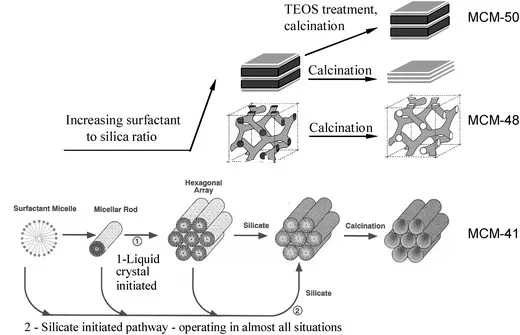
MCM-48 is a mesoporous silica material characterized by a cubic, three-dimensional pore network. Its pores typically fall within the mesoporous range, which allows larger molecules to move freely through the structure. This feature alone sets it apart from many microporous catalysts that restrict diffusion.
Because of this open architecture, it supports faster mass transfer and more uniform reaction conditions. Reactants reach active sites easily, while products leave without obstruction. Consequently, catalytic reactions proceed more efficiently and with fewer side reactions.
Another reason this molecular silica sieve matters lies in its versatility. Engineers can modify its surface chemistry, introduce metal species, or combine it with other catalytic phases. Therefore, it adapts well to different reaction environments without losing its structural advantages.
The Mesoporous Design That Enables Performance
The performance of this material is directly connected to its mesoporous design. Unlike one-directional channel systems, its three-dimensional pore network allows molecules to diffuse in multiple directions. This connectivity reduces bottlenecks and prevents local accumulation of reactants.
In catalytic reactions involving bulky molecules, diffusion resistance often limits reaction rates. It overcomes this limitation by offering large pore volumes and interconnected pathways. As a result, active sites remain accessible even under high reactant concentrations.
Moreover, the uniformity of pore size supports consistent reaction behavior. When all catalytic sites experience similar conditions, selectivity improves, and unwanted byproducts decrease. This balance between accessibility and control defines the value of mesoporous materials in advanced catalysis.
Surface Chemistry and Active Site Accessibility
While pore structure matters, surface chemistry determines catalytic activity. MCM-48 provides a high surface area rich in silanol groups. These groups serve as anchoring points for metals, acids, or functional molecules.
By introducing metal nanoparticles or acidic components, engineers create active catalytic sites without blocking pore entrances. Because the pores remain open, reactants still move freely. This combination of high dispersion and accessibility leads to higher catalytic efficiency.
Additionally, surface modification allows fine-tuning of reaction behavior. For example, adjusting acidity influences reaction pathways, while metal selection controls activity toward specific transformations. This flexibility helps MCM-48 perform well across diverse chemical processes.
Advantages Over Conventional Catalysts
Compared to conventional catalysts, MCM-48 offers several clear advantages. First, it minimizes diffusion limitations. Traditional materials often rely on narrow channels or external surfaces, which restrict access and slow reactions.
Second, it improves catalyst stability and the even distribution of active sites, reducing localized overheating and coke formation. As a result, catalysts maintain activity over longer operating periods.
Third, regeneration becomes easier. Because pores remain accessible, regeneration agents remove deposits effectively. This feature reduces downtime and extends catalyst lifespan, which directly impacts operational costs.
Together, these advantages make this material attractive for industries that prioritize efficiency, reliability, and scalability.
Real Applications in Advanced Catalysis
It supports a wide range of catalytic applications. In petrochemical processing, it enhances reactions involving larger hydrocarbon molecules. Faster diffusion improves conversion rates while preserving selectivity.
In fine chemical synthesis, reaction precision matters more than volume. It provides controlled environments that favor specific reaction pathways. This control improves product purity and reduces separation steps.
Energy-related processes also benefit. Catalysts based on MCM-48 support reactions relevant to fuel upgrading and renewable feedstock conversion. Its mesoporous design accommodates complex molecules derived from biomass, which often challenge traditional catalysts.
Across these applications, performance links directly to structural design rather than material quantity.
Practical Tips for Using MCM-48 Effectively
To maximize the benefits of MCM-48, engineers should follow practical guidelines. First, selecting appropriate pore size and surface treatment ensures compatibility with target molecules. Matching pore dimensions to reactant size prevents unnecessary resistance.
Second, dispersion of active components matters. Uniform distribution avoids agglomeration, which can block pores and reduce activity. Using controlled impregnation or deposition methods improves consistency.
Third, operating conditions should align with material stability. While this material tolerates a wide range of environments, extreme conditions require careful evaluation. Testing under realistic conditions helps identify optimal parameters early.
Finally, monitoring performance over time allows proactive maintenance. Detecting early signs of deactivation supports timely regeneration and protects process efficiency.
Role in Sustainable and Efficient Chemical Processes
Sustainability increasingly shapes catalyst selection. MCM-48 contributes by improving reaction efficiency and reducing energy consumption. Faster reactions require less heat and shorter processing times.
In addition, higher selectivity minimizes waste generation. When fewer byproducts form, separation becomes simpler and resource use declines. These improvements support environmental goals without sacrificing productivity. Longer catalyst life lowers raw material demand and disposal frequency. Over time, these factors add up to meaningful sustainability gains.
Future Opportunity in Catalysis
Looking ahead, MCM-48 will likely play an even greater role in advanced catalysis. As chemical processes become more complex, the need for materials that combine accessibility with control will grow.
Research trends focus on hybrid systems that integrate this molecular sieve silica with other functional materials. These systems aim to combine mesoporous transport with specialized catalytic functions. Such designs could unlock new reaction pathways and improve efficiency further.
Digital process control also influences future adoption. As monitoring technologies advance, catalysts must respond predictably to changing conditions. supports this requirement because of its uniform structure and stable behavior.
Conclusion: Where Design Meets Performance?
MCM-48 demonstrates how thoughtful material design drives catalytic performance. Its three-dimensional mesoporous structure removes diffusion barriers, improves accessibility, and supports consistent reactions. These features allow engineers to bridge the gap between laboratory concepts and industrial demands.
As industries seek higher efficiency, cleaner processes, and reliable performance, molecular sieve silica becomes increasingly valuable. By combining structural intelligence with practical adaptability, it continues to shape the future of advanced catalysis.



Leave a Reply