
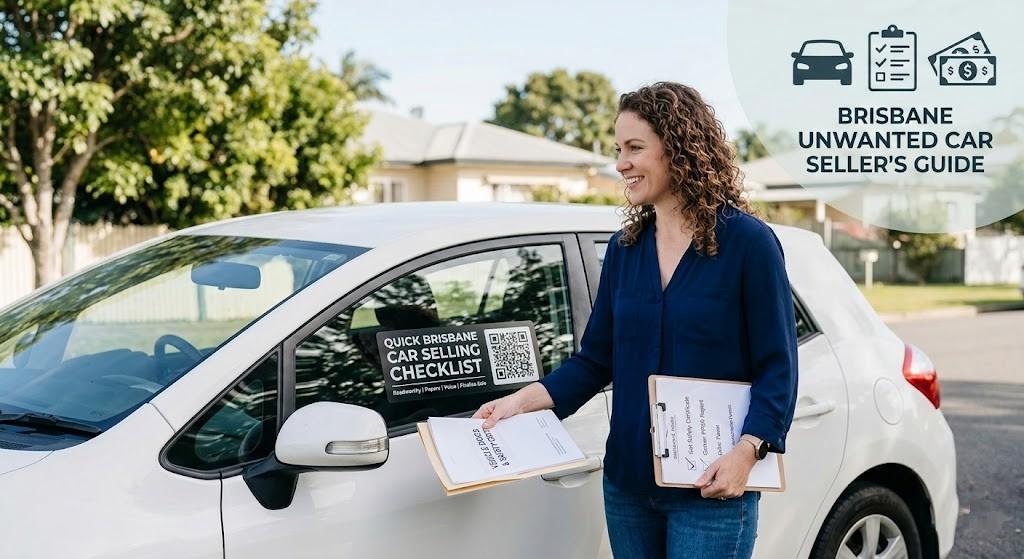
Moving an old vehicle off your property in South East Queensland involves more than just handing over the keys. Whether your car is a reliable old runner or a stationary garden ornament, following a structured process ensures you meet legal obligations and maximise your return.
The ultimate checklist for selling your unwanted car in Brisbane includes verifying ownership, obtaining a safety certificate for registered vehicles, and choosing the right disposal method for your specific situation. This guide provides a comprehensive roadmap for navigating the Brisbane market in 2026.
1. Gather Essential Documentation & Proof of Car Ownership
To sell any vehicle legally in Queensland, you must prove you are the rightful owner or have the legal authority to sell it. The Department of Transport and Main Roads (TMR) requires specific paperwork to facilitate a smooth transfer of title.
-
Registration Certificate: Locate your current registration papers to confirm the VIN and engine numbers.
-
Proof of Identity: Have your Queensland Driver’s Licence ready for the buyer to inspect.
-
Service History: Collect any logbooks or receipts for repairs, including recent oil changes or tyre replacements.
-
PPSR Certificate: Obtain a Personal Property Securities Register (PPSR) report for $2 to show the car is free of debt and hasn’t been written off.
Paperwork Requirements by Car Type
| Vehicle Status | Required Documents |
| Registered Car | Safety Certificate (RWC), Transfer Application Form (F3520), Receipt of Sale |
| Unregistered Car | Proof of Ownership (Original Purchase Receipt), Notice of Disposal |
| Written-Off / Scrap | Photo ID, Cancellation of Registration Form (if applicable) |
2. Obtain a Queensland Safety Certificate
A Queensland Safety Certificate is a mandatory document for selling any registered light vehicle in Brisbane. This certificate, often called a Roadworthy Certificate (RWC), confirms that the vehicle meets minimum safety standards for Queensland roads.
To obtain a safety certificate, visit an Approved Inspection Station (AIS). In 2026, the standard fee for a light vehicle safety inspection is approximately $95 to $110, depending on the provider. The inspection covers 6 primary areas:
-
Tyres and wheel alignment.
-
Brake system performance.
-
Steering and suspension components.
-
Body damage or rust.
-
Lights and electrical signals.
-
Windscreen condition and wipers.
Note: You do not need a Safety Certificate if you are selling the car to a licensed motor dealer or if the vehicle is being sold “as-is” without registration.
3. Prepare the Vehicle for Sale
First impressions significantly influence the final sale price, even for “unwanted” cars. A clean car suggests a well-maintained machine, whereas a dusty interior can lead to lower offers.
-
Professional Detailing: Spend $150 on a full detail to potentially add $500 or more to the perceived value.
-
Minor Repairs: Fix simple issues like blown bulbs, cracked wiper blades, or missing hubcaps.
-
Remove Personal Data: Delete saved locations from the GPS and unpair your Bluetooth devices to protect your privacy.
-
Clear the Cabin: Remove all personal items, including E-toll tags and garage door openers.
4. Choose Your Selling Strategy
Brisbane offers 3 primary ways to sell an unwanted car, each suited to different timelines and vehicle conditions. Selecting the right method depends on whether you value high profit or high convenience.
Private Sale
A private sale involves listing your car on platforms such as Facebook Marketplace, Gumtree, or Carsales. This method usually yields the highest price because you are selling directly to the end-user. However, it requires you to manage enquiries, host test drives, and ensure the car has a valid RWC.
Dealer Trade-In
Trading in your car at a Brisbane dealership is the fastest way to move into a new vehicle. While convenient, dealers typically offer 20% to 30% less than market value because they need to account for their own resale margins and reconditioning costs.
Cash for Cars / Car Removal
Cash for cars services in Brisbane are the best choice for non-running, damaged, or scrap vehicles. These companies offer free towing across suburbs—from Chermside to Logan—and pay you instantly.
Pros and Cons of Selling Methods:
-
Private Sale: High profit, but high effort and potential for “tyre kickers.”
-
Dealer Sale: Very fast and secure, but lower financial return.
-
Scrap Removal: Accepts cars in any condition, but payouts are based primarily on metal weight.
5. Determine the Market Value
Pricing your car accurately prevents it from sitting on the market for months. In early 2026, scrap metal prices in Brisbane are averaging $150 to $200 per tonne for completely non-functional vehicles.
For cars that still run, use online tools like RedBook or search for similar “Sold” listings in Brisbane. If your car has 4 specific features—low mileage, a full service history, recent tyres, and no accident history—you can comfortably price it at the higher end of the market range.
6. Finalise the Legal Transfer
The sale is only complete once the legal responsibility has shifted to the new owner. Failure to lodge the disposal paperwork can result in you receiving the buyer’s future speeding fines or parking tickets.
-
Complete the Transfer Form: Both parties must sign the Vehicle Registration Transfer Application (F3520).
-
Provide a Receipt: Include the date of sale, sale price, VIN, and the full names of both parties.
-
Notify TMR: Lodge the “Notice of Disposal” online via the TMR portal immediately after the car leaves your driveway.
-
Cancel Insurance: Contact your provider to cancel or transfer your Compulsory Third Party (CTP) and comprehensive insurance policies.
-
Refund Remaining Rego: If selling for scrap, you can cancel the registration and apply for a pro-rata refund on the remaining months.
Summary Checklist for Brisbane Car Sellers
To ensure you haven’t missed a step, tick off these 7 items before the buyer arrives:
-
[ ] Verified ownership and cleared any outstanding finance.
-
[ ] Obtained an RWC (if selling registered).
-
[ ] Cleaned the interior and exterior thoroughly.
-
[ ] Removed all personal belongings and E-tags.
-
[ ] Prepared a written receipt for the transaction.
-
[ ] Confirmed the payment has cleared in your bank account.
-
[ ] Lodged the Notice of Disposal with Queensland Transport.
Following this structured approach protects your legal interests and ensures you receive a fair price for your vehicle in the competitive Brisbane market.





Leave a Reply