
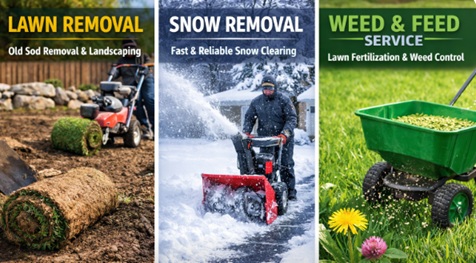
Winter chores take time and can be risky, so hiring a snow removal service saves you hassle and keeps your property safe. A professional service clears driveways, walkways, and entry points quickly and reliably, reducing slip-and-fall hazards and giving you back time each winter.
This article walks you through how snow removal works, what services and guarantees to expect, and how to pick a provider that matches your needs and budget. By the end, you’ll know how to compare equipment, response times, pricing models, and service terms so you can choose a plan that keeps your home accessible all season.
Snow Removal Service Basics
You’ll learn common snow removal services types, why hiring professionals pays off, and how standard equipment performs for driveways, sidewalks, parking lots, and private roads. The details below focus on practical choices, safety implications, and typical performance you can expect.
Types of Snow Removal Services
Residential plowing and shoveling target driveways, walkways, and steps. Providers often offer one-time calls, seasonal contracts, or per-storm billing. Seasonal contracts commonly include pre- and post-storm plowing, sidewalk clearing, and de-icing.
Commercial services serve parking lots, loading docks, and multi-unit properties. They use larger fleets and layered response plans: priority routes, curb-to-curb clearing, and repeated passes during long storms. Contracts typically specify snow depth triggers and response times.
Specialized services include private road clearing, snow hauling, and roof snow removal. Roof work reduces structural risk but requires trained crews and fall protection. Snow hauling removes accumulation when sites lack on-site storage.
Benefits of Professional Snow Removal
You reduce liability by hiring crews who follow local regulations and maintain insurance. Professionals clear faster and more uniformly than untrained homeowners, which lowers slip-and-fall risk for visitors or customers.
You preserve property surfaces and landscaping by relying on appropriate equipment and techniques. Pros understand when to use snowplows versus shovels, and how to avoid damaging curbs, lawns, and pavers.
You gain predictable budgeting and guaranteed response windows with contracts. That helps you plan access and business operations during winter. Emergency or after-hours options are often available for high-risk properties.
How Snow Removal Equipment Works
Plows attach to trucks, skid steers, or tractors and push snow to the side. Blade angle, material (steel vs rubber), and wing additions affect how much snow the machine moves and how close it gets to curbs.
Snow blowers use an auger and impeller to lift and throw snow through a chute. Two-stage blowers break and then eject packed or wet snow efficiently, making them useful for deep accumulations and tight areas like sidewalks.
Spreaders dispense salt, sand, or chemical de-icers to reduce freezing and improve traction. Application rate and timing matter: too much chemical harms nearby vegetation and concrete, too little leaves ice behind. Skilled operators coordinate plowing and de-icing for best results.
Choosing a Snow Removal Service
Pick a provider that matches your property size, budget, and tolerance for risk. Focus on verified experience, clear pricing, and dependable response windows.
Evaluating Service Providers
Check licensing, insurance, and references before you sign anything. Ask for a current liability insurance certificate and proof of worker’s compensation to avoid responsibility for accidents on your property.
Request at least three local references and call them to confirm reliability during heavy storms. Ask about equipment: plows, skid-steer loaders, snow blowers, and ice management tools. Match equipment to your site—small walkways need blowers; large lots need plow trucks.
Confirm the company’s experience with properties like yours. If you own a retail parking lot, verify they handle high-traffic commercial sites and coordinate with business hours. For residential properties, ask about driveways, sidewalk clearing, and salt application practices.
Pricing and Contracts
Understand the contract type: per-storm, seasonal, or per-hour. Per-storm contracts charge each event and can vary; seasonal contracts offer predictable billing but may include minimums. Per-hour rates can escalate during peak demand.
Get a written breakdown of fees and services. Insist the contract lists response time guarantees, start and completion criteria, de-icing materials used, and exact areas to be cleared. Verify any additional charges—for push-back snow, hauling, or extended hours—and how they’re calculated.
Include termination and dispute clauses. Confirm how billing disputes are handled and whether you can cancel for nonperformance. Keep invoices and service logs for at least one season in case you need to prove missed or substandard service.
Scheduling and Availability
Ask about guaranteed response times and how they change with storm severity. A common standard is within 1–4 hours after the storm ends for commercial lots; residential services may offer next-business-day clearing. Get those windows in writing.
Learn the company’s staffing plan for major storms. Ask if they subcontract or use on-call crews and how they prioritize clients. Clarify how the provider communicates during storms—text alerts, email updates, or a hotline—and confirm the person you can contact for immediate issues.
Plan backup options for prolonged storms. Verify snow-hauling capacity and whether the company has agreements with dump sites. If you require 24/7 access, ensure the contract explicitly commits to overnight or emergency clearing and states any premium rates.





Leave a Reply