
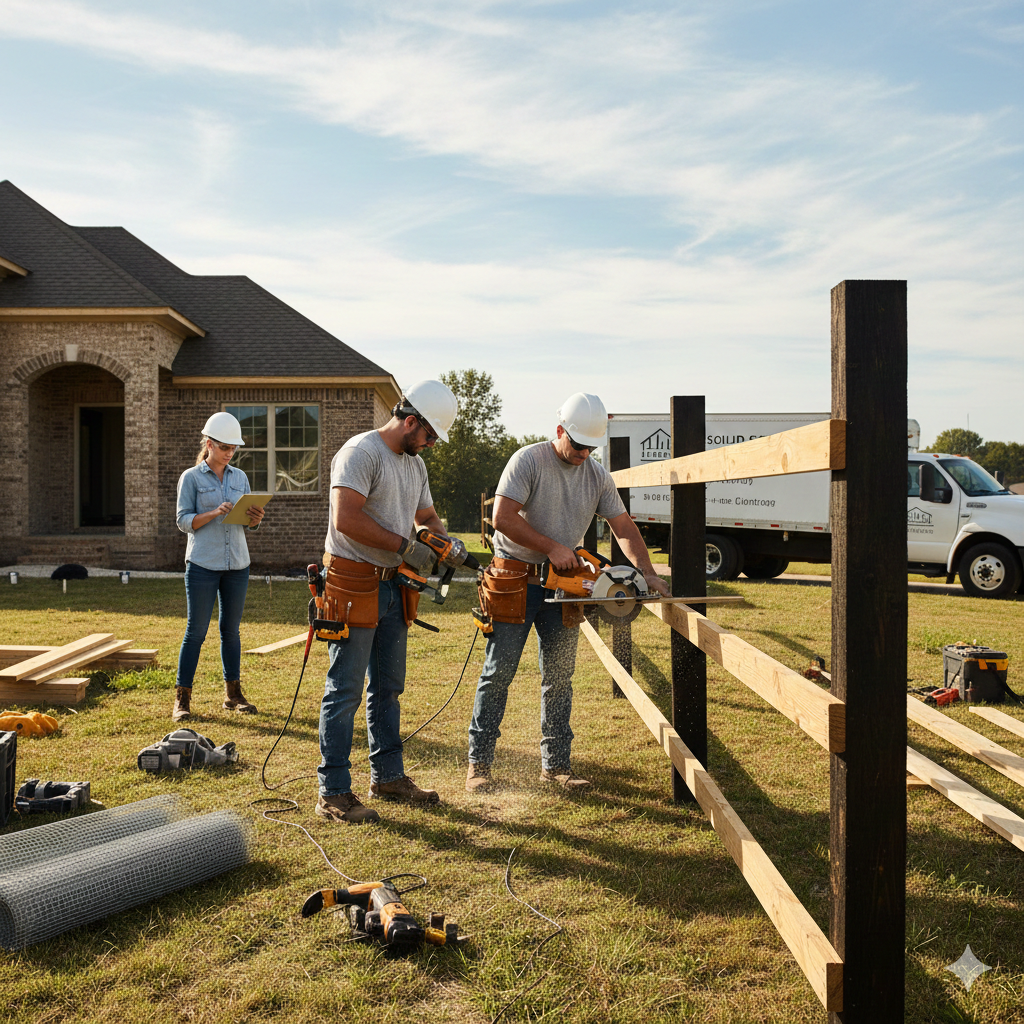
You want a fence that looks right, lasts, and adds real value to your property. Hire a licensed, local fencing contractor who explains materials, timelines, and costs up front so you avoid surprises and get the result you expect.
This post walks through how to choose a dependable fence contractor, what services and installation steps to expect, and the questions to ask during estimates. Use these pointers to compare bids, spot red flags, and move from planning to a finished fence with confidence.
Choosing a Fence Contractor
Choose a fence contractor who proves competence, communicates timelines clearly, and provides transparent, comparable quotes. Focus on credentials, realistic schedules, and line-item pricing so you can compare bids and avoid surprises.
Evaluating Credentials and Experience
Check license and insurance first. Ask the contractor for a copy of their business license, proof of general liability insurance, and workers’ compensation coverage so you won’t be liable for on-site injuries or damage.
Review at least three recent projects that match your fence type and scope. Request photos, references with contact information, and the names of suppliers used. Confirm how long they’ve worked on similar materials—wood, vinyl, metal, or composite—and whether they handle permits and utility-locate calls.
Verify memberships and certifications when relevant. Industry association membership, manufacturer certifications, or specialty training indicate familiarity with best practices and warranty procedures. Note any red flags: refusal to provide documentation, vague answers about past work, or a history of unresolved complaints.
Understanding Project Timelines
Get a written start date and a projected completion date tied to specific milestones. Ask what could delay the project—permit waits, utility locates, weather, material lead times—and how the contractor will communicate schedule changes.
Confirm crew size and daily work hours. Knowing how many installers will be on-site and their typical workday helps you judge the schedule’s realism. Ask whether subcontractors will perform parts of the job and how you’ll be informed about their involvement.
Discuss permit and inspection responsibilities. Clarify who pulls permits, requests inspections, and handles corrections. Agree on a plan for unexpected issues—hidden rot, large grade changes, or encountering unexploded utilities—and how cost/time adjustments will be approved.
Comparing Quotes and Services
Request at least three written, itemized bids for the same scope and materials. Compare line items for materials, labor hours, concrete/post settings, gate hardware, cleanup, and disposal so you can evaluate true cost differences.
Look beyond price to warranties and included services. Note manufacturer warranties, workmanship guarantees, and whether staining, sealing, or post-treatment is included. Check if the quote includes removal and disposal of your old fence and site restoration.
Ask about payment terms and change-order procedures. Avoid large upfront payments; a common structure is a deposit with staged payments tied to milestones. Insist on written change orders for scope or material substitutions and a clear process for authorizing extra work.
Fence Installation and Services
You’ll get practical guidance on picking materials, tailoring a design to your property, and keeping the fence functional over time. Expect specifics on common fence types, customization choices that affect cost and performance, and routine and emergency maintenance tasks.
Types of Fencing Solutions
Choose from materials that match budget, purpose, and local climate. Common residential options include:
- Wood: cedar or pressure-treated pine for privacy and a natural look; requires staining or sealing every 2–4 years.
- Vinyl: low-maintenance, resists rot and insects; color and panel styles vary but repairs can require full panel replacement.
- Aluminum and steel: durable for ornamental or security fences; aluminum resists rust, steel offers higher strength with protective coatings.
- Chain-link: cost-effective for boundary and pet control; add privacy slats or vinyl coating for improved appearance.
- Composite: mixed wood/plastic boards that resist moisture and need less upkeep than wood but cost more upfront.
You should weigh lifespan, maintenance frequency, local building codes, and fencing purpose (privacy, security, containment, or aesthetics) when choosing. Ask your contractor for examples of similar installations in your neighborhood.
Custom Design Options
Decide on height, picket spacing, gate styles, and decorative elements that meet both code and aesthetic goals. You can select features such as:
- Gates: single, double, or automated; include hardware grade, locking options, and clear opening widths.
- Top treatments: scalloped, dog-ear, lattice, or flat caps to change the visual profile.
- Finishes: stains, paints, powder-coating for metal, or textured vinyl to match exterior trim.
- Integrated elements: lighting, pet doors, privacy lattices, or trellises for climbing plants.
Your contractor should provide a detailed estimate listing materials, labor, post types and spacing, concrete footing depth, and estimated lead times. Request drawings or mockups and verify property lines and utility clearances before installation begins.
Maintenance and Repair
Create a schedule for inspections and simple upkeep to extend your fence’s life and avoid costly repairs. Typical tasks include:
- Annual checks of posts for rot or shifting, and tightening or replacing loose fasteners.
- Cleaning vinyl and composite with mild detergent; power-wash wood carefully to avoid damage.
- Re-staining or sealing wood every 2–4 years depending on exposure and finish condition.
- Spot-treating metal for rust with wire brushing and touch-up paint; check gate hinges and latches for alignment.
For repairs, document damage with photos and get a written repair estimate that lists parts and labor. Emergency services for fallen or compromised sections are often available; confirm response times and warranties with your contractor before work starts.






Leave a Reply