
Introduction
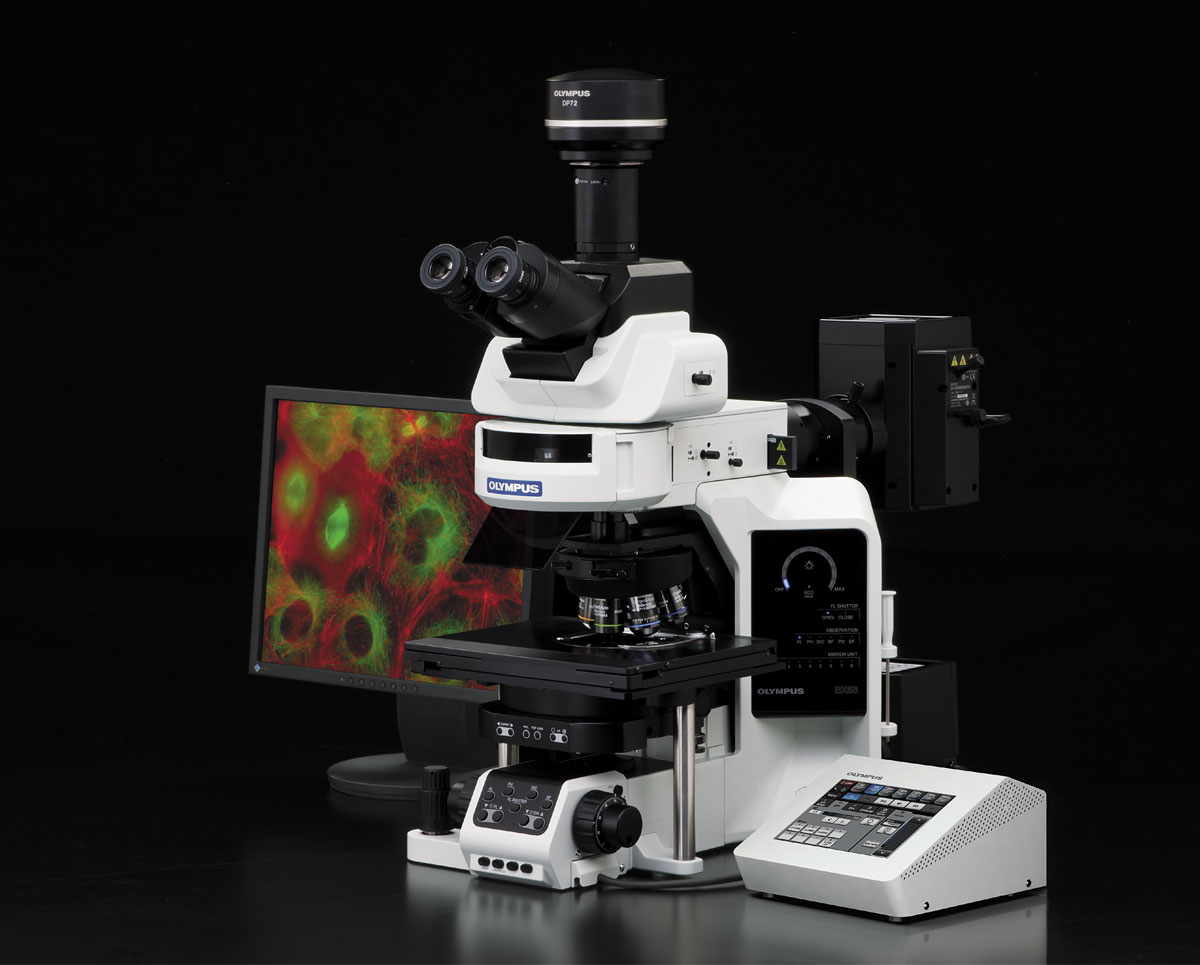
Modern life science research relies heavily on advanced microscopy technologies that allow scientists to observe cellular structures with exceptional clarity. The Evident BX63 microscope is a powerful imaging system designed to meet the demands of advanced biological and biomedical research.
This high-performance microscope provides superior optical quality, automation capabilities, and advanced fluorescence imaging. Researchers working in fields such as cell biology, neuroscience, pathology, and molecular biology depend on microscopes like the BX63 to capture highly detailed images of biological specimens.
The Evident BX63 microscope combines innovative optical technology with flexible configurations, making it one of the most reliable imaging platforms for modern laboratories.
Advanced Optical Performance
One of the most notable features of the Evident BX63 microscope is its advanced optical system. High-quality optics ensure that researchers obtain sharp, high-contrast images even when observing extremely small cellular structures.
The microscope supports multiple observation techniques, including:
-
Brightfield microscopy
-
Fluorescence microscopy
-
Differential interference contrast (DIC)
-
Phase contrast microscopy
These imaging techniques allow researchers to study different aspects of biological samples, including cellular morphology, protein expression, and molecular interactions.
Automated Imaging Capabilities
Automation plays a key role in modern microscopy workflows. The Evident BX63 microscope includes motorized components that simplify image acquisition and improve experimental efficiency.
Automation features include:
-
Motorized stage movement
-
Automatic focus adjustment
-
Programmable imaging sequences
-
Integrated imaging software
These capabilities enable researchers to capture large datasets quickly and accurately while minimizing manual adjustments.
Applications in Life Science Research
The BX63 microscope is widely used across multiple research disciplines.
Cell Biology
Researchers use the BX63 to study cell structures, intracellular processes, and cellular interactions. High-resolution imaging helps scientists analyze cell behavior in detail.
Neuroscience
In neuroscience research, the microscope allows scientists to examine neurons, neural networks, and synaptic connections.
Pathology
Pathologists rely on advanced microscopes to examine tissue samples and detect disease-related changes at the cellular level.
Molecular Biology
Fluorescence imaging helps scientists track specific proteins and molecules within cells, providing valuable insights into biological processes.
Digital Imaging Integration
Modern laboratories require imaging systems that can capture and analyze data digitally. The BX63 microscope can be integrated with advanced digital cameras and image analysis software.
This integration allows researchers to:
-
Capture high-resolution images
-
Record live cell imaging experiments
-
Analyze cellular structures using software tools
-
Store and share research data efficiently
Conclusion
The Evident BX63 microscope represents a significant advancement in scientific imaging technology. Its powerful optical system, automation capabilities, and versatile applications make it an essential tool for life science research laboratories.
By enabling detailed observation of biological samples, the BX63 microscope helps researchers gain deeper insights into complex biological systems and drive scientific discoveries.



Leave a Reply