
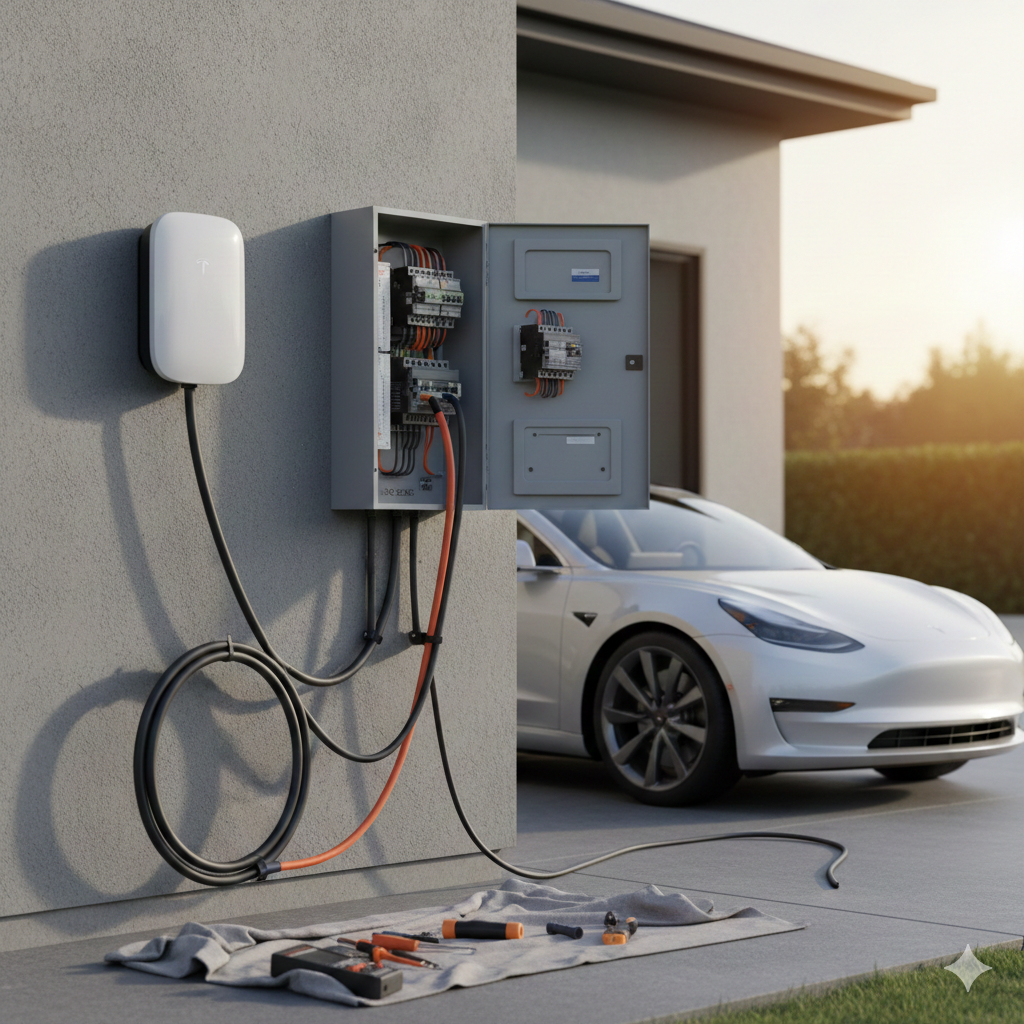
Looking for “ev charging station installers near me” means you want a reliable local team that handles planning, permits, and scalable installation for homes, condos, or businesses. You can find installers near me who consult on site needs, secure permits, and complete Level 2 or commercial-grade installations so your property meets current and future demand.
This article walks you through how to locate qualified installers nearby, what to expect during installation, and the aftercare services that keep chargers working reliably. Keep reading to learn practical steps for vetting contractors, understanding costs and timelines, and ensuring ongoing support for your charging infrastructure.
Finding EV Charging Station Installers Near Me
You’ll want installers who match your site’s electrical capacity, required charger level (Level 1, Level 2, or DC fast), and any building or HOA rules. Compare qualifications, local permitting experience, and clear written quotes before you schedule work.
What to Look For in an EV Charging Station Installer
Look for installers with specific experience on the charger brand and model you plan to buy. Ask whether they’ve completed installations for the same charger and vehicle types, and request photos or references from recent jobs.
Verify scope of service: site assessment, panel upgrades, conduit and cable work, charger mounting, commissioning, and cleanup. Confirm whether they handle electrical permitting and coordinate with your utility if a service upgrade or load study is needed.
Check warranty handling. Good installers register warranty activation for both equipment and workmanship, and provide a written service warranty (typically 1 year or more). Prefer installers who offer a post-installation test report and basic user instruction.
Evaluating Installer Certifications and Experience
Confirm the electrician’s license and insurer details; get license number and insurance certificate up front. Look for certifications such as NICEIC, NABCEP (if applicable), or manufacturer-specific installer training, which show formal training on EV hardware.
Ask how many EV chargers they’ve installed in the last 12 months and whether they’ve worked on residential versus commercial systems. Field experience matters: installers familiar with panel upgrades, service disconnects, and load calculations will reduce surprises.
Review online ratings and direct references. A consistent record of timely permits, clean site practice, and clear communication is more valuable than a single low price. Keep a short checklist during calls: license, insurance, manufacturer training, recent jobs, and permit handling.
Local Regulations and Permitting
Permitting rules vary by city and utility. You must know whether your jurisdiction requires a permit for charger installation, whether inspections will be scheduled, and what documentation the inspector expects.
Ask the installer if they pull permits in your municipality or if you must. Confirm timelines: some jurisdictions schedule inspections within days, others take weeks. Also ask if your property is in an HOA or condominium association that requires additional approval and whether the installer will prepare required diagrams.
Check for utility interconnection or rebate paperwork. Many utilities offer residential EV charger incentives that require specific metering or application steps. Choose an installer familiar with local rebate forms and net-load documentation to help secure available savings.
How to Compare Installer Quotes
Request written quotes from at least three installers that itemize labor, parts, permits, panel upgrades, and travel. Use a simple comparison table to line up costs and services.
Suggested table columns:
- Installer name
- Total price
- Included services (assessment, permits, panel work)
- Estimated timeline
- Warranty (equipment/workmanship)
- References provided
Compare non-price factors: whether the quote includes a site visit, clarity on who buys the charger, expected permit fees, and payment schedule. Beware unusually low bids that omit permit pulls or post-install testing. Choose the quote that balances clear scope, documented credentials, local permitting experience, and a reasonable timeline.
Installation Process and Aftercare Services
You’ll get a clear plan, a recommended charger type, and a schedule for installation and follow-up services. Estimates will list costs for hardware, electrical upgrades, permits, and regular support options.
Site Assessment and Pre-Installation
A certified installer inspects your property to confirm circuit capacity, panel space, and the ideal charger location. They check distance from the panel to the parking spot, trenching or conduit needs, and any accessibility or HOA restrictions that affect routing and placement.
Expect a brief on required electrical upgrades: new breakers, subpanel installation, or meter upgrades if demand exceeds existing capacity. The installer will pull permits and provide a written scope with timelines and costs before work begins.
You should receive a site diagram and an equipment specification sheet showing charger model, cable length, mounting type (wall or pedestal), and recommended breaker size. Ask for references and proof of insurer and certification before authorizing work.
Types of Charging Stations Available
Level 1 chargers use a standard 120V outlet and add about 3–5 miles of range per hour; they suit overnight charging for low-mileage drivers. Level 2 chargers run on 240V and typically deliver 20–60 miles of range per hour; they are the most common home and workplace choice.
Commercial or fast options include DC fast chargers (CHAdeMO, CCS) that provide rapid charging for public or high-usage sites, but they require significant electrical infrastructure and higher costs. Choose a charger by matching your vehicle’s onboard charger, daily mileage, and installation budget.
Compare smart features: Wi‑Fi or cellular connectivity, load management, scheduling, and energy metering. These features affect installation complexity and may require network access or additional hardware like a gateway.
Ongoing Maintenance and Support
After installation, your provider should offer a warranty for labor and equipment and outline routine checks. Typical aftercare includes annual visual inspections, testing ground-fault protection, tightening connections, and firmware updates for smart chargers.
Set up remote monitoring or an app to track energy use and alerts for faults. For multi-unit dwellings or commercial sites, consider a service contract that includes priority repairs, replacement hardware discounts, and regular preventive maintenance.
Keep paperwork: permit approvals, inspection certificates, warranty terms, and the installer’s contact for emergency service. That documentation speeds claims and future upgrades.




Leave a Reply