
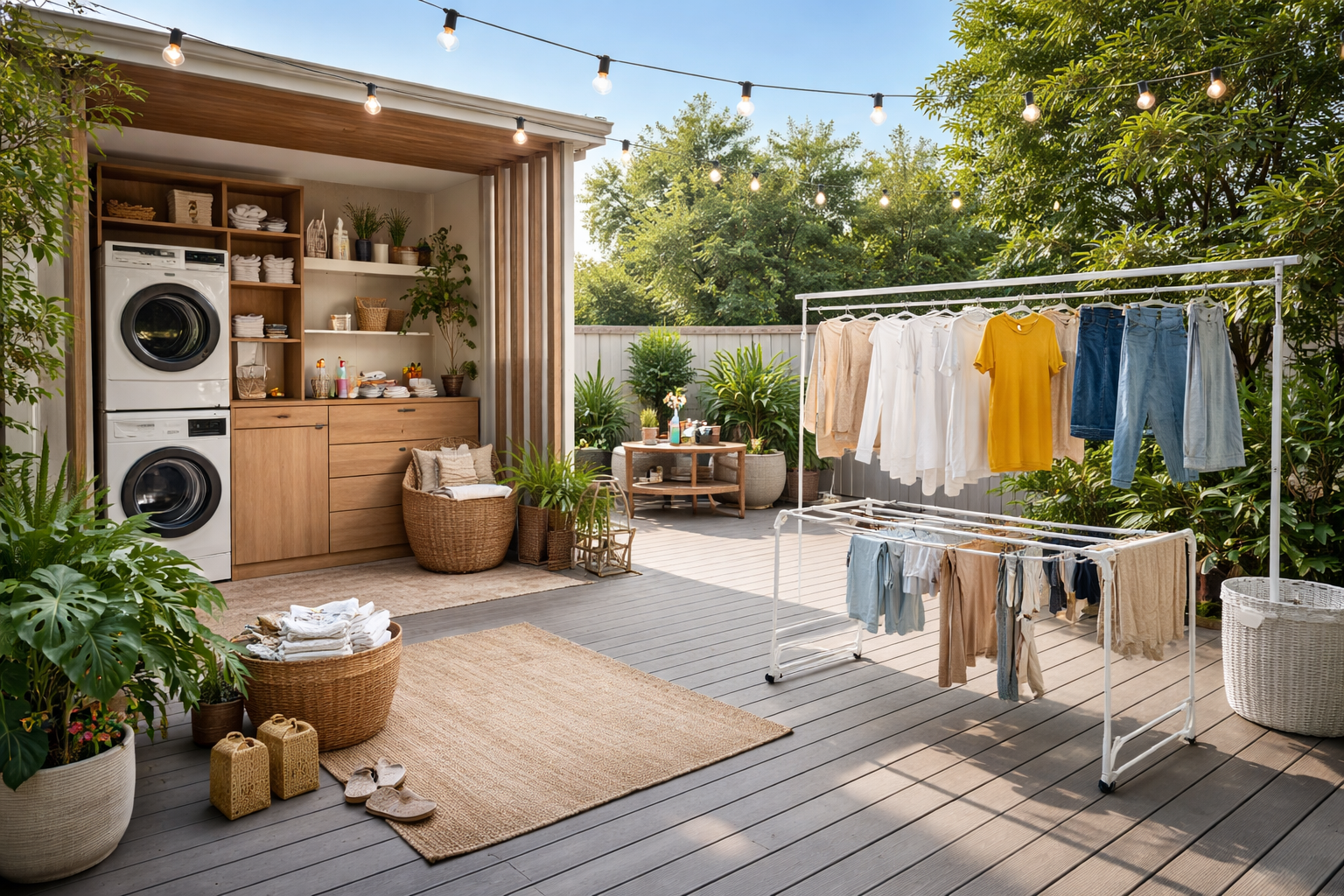
You need a practical clothes dryer that saves space, handles weight, and makes drying easier in any home. منشر ملابس عملي is the right choice for everyday convenience and efficiency. Choose a compact, sturdy model—folding or vertical designs with rust-resistant materials and multiple tiers give the best balance of capacity and convenience.
This guide shows how to pick the right design for your balcony, bathroom, or laundry corner and how simple habits—proper spacing, secure installation, and choosing durable materials—keep your dryer working well for years.
Choosing the Right Practical Clothes Dryer
Choose a dryer that fits your routine, space, and material needs. Focus on type, essential features, and exact dimensions to match your home and laundry habits.
Types of Clothes Dryers
You can pick from three main types: electric heated airers, heated rail electric models, and traditional foldable racks. Electric heated airers provide faster drying for delicates and small loads; they work well in cold or humid seasons when air-drying is slow. Heated rail models give higher drying speed and often include multiple bars for shirts, towels, and small items. Foldable racks (aluminum, stainless steel, or heavy-duty plastic) cost less and suit routine daytime air-drying in sunny, ventilated spaces.
Consider mobility and indoor vs. outdoor use. Portable electric units need a power socket and produce gentle heat; they perform poorly outdoors. Heavy-duty stainless options resist rust if you plan to store the dryer in a balcony or bathroom.
Key Features to Consider
Prioritize build material, load capacity, and drying method. Stainless steel offers corrosion resistance and long life; aluminum is lightweight; high-grade plastic saves cost and resists moisture. Check the number of bars or hanging space in meters rather than vague “large” labels so you can estimate how many shirts or towels fit.
Look for foldability and storage footprint—how compact it is when collapsed. For electric models, compare wattage and expected drying time; lower wattage uses less energy but takes longer. Safety features like overheat protection and grounded plugs matter when you run heated units near fabrics. Also evaluate assembly ease and whether spare parts or replacement clips are available.
Size and Space Requirements
Measure the intended location before buying. Note floor area, ceiling height, and any doors or windows that must open; a tall tower-style dryer may not fit under shelves or in narrow balconies. For balcony or utility-room placement, allow at least 10–20 cm clearance around the dryer for airflow if it uses heat.
Estimate capacity visually: a 1.2–1.5 meter span of bars typically handles 6–8 shirts or two bath towels per layer. If you dry bulky items like duvets, confirm maximum single-item length and weight capacity. Finally, consider storage: a collapsible dryer that reduces to under 30 cm depth works better in apartments with limited closet space.
Benefits and Best Practices for Practical Clothes Dryers
Practical clothes dryers save space, protect fabrics, and cut drying time when you choose the right model and use it correctly. The following subsections explain daily advantages, simple maintenance steps to extend life, and concrete energy-saving tactics you can apply immediately.
Advantages for Daily Use
A practical dryer gives you predictable drying capacity for daily loads. Choose a three-tier or foldable rack with stainless-steel bars to hold shirts, towels, and delicates without sagging. Wheels or a lightweight frame let you move wet loads to sunlight or a ventilated room in seconds.
You’ll reduce wear from outdoor sun and avoid color fading by drying indoors or in the shade. For small apartments, use a compact hanging rack over radiators or a balcony rail to free floor space. If you wash frequently, pick a model with multiple levels so you can separate heavy items (towels) from lightweight garments (underwear) for faster, even drying.
Maintenance and Longevity
Inspect joints, welds, and wheel casters every month to catch rust or looseness early. Wipe down metal frames after damp use and apply a rust-inhibitor spray if you store the dryer in humid areas. Tighten screws and replace bent bars promptly; a single damaged rod concentrates weight and shortens overall life.
Store the dryer folded in a dry spot and keep plastic clips or hangers in a small pouch to avoid losing parts. For electric or heated models, clean heating elements and vents according to manufacturer guidelines and unplug before servicing. Regular light maintenance prevents breakdowns and keeps drying performance consistent.
Energy Efficiency Tips
Position the dryer where airflow is strongest—near a window, door, or fan—to cut natural drying time by up to 30%. Spread garments with space between them and hang heavier items on lower bars to encourage convection; denser materials dry faster with direct airflow. Rotate items midway to expose damp spots to air.
Use a dehumidifier or exhaust fan in the drying area when indoor humidity is high to speed evaporation. For heated racks, run them on lower temperature settings and shorter cycles; combine with good ventilation to achieve dry clothes with less electricity. Label settings and keep a short checklist by the dryer so you don’t overuse heat.




Leave a Reply